Anthropic just published their latest Economic Index Report, pulled from 1 million Claude conversations in February 2026. Not opinions, not predictions. Raw data from the platform I use every day to run 5 companies.
Source: Anthropic Economic Index Report, March 2026
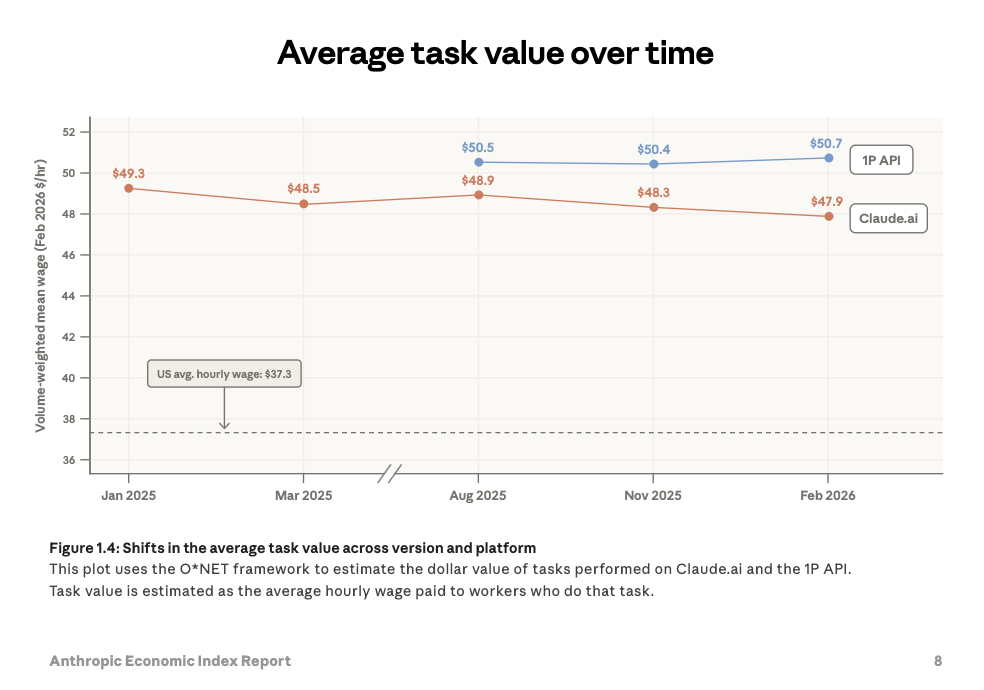
One thing jumps out immediately: Claude usage on Claude.ai is getting more diverse. The top 10 most common tasks dropped from 24% to 19% of all usage between November 2025 and February 2026. People aren't just using Claude for coding or specific tasks anymore. They're bringing every kind of work here. Business operations, personal questions, you name it. But there's one number that made me stop scrolling.
Source: Anthropic Economic Index Report, March 2026
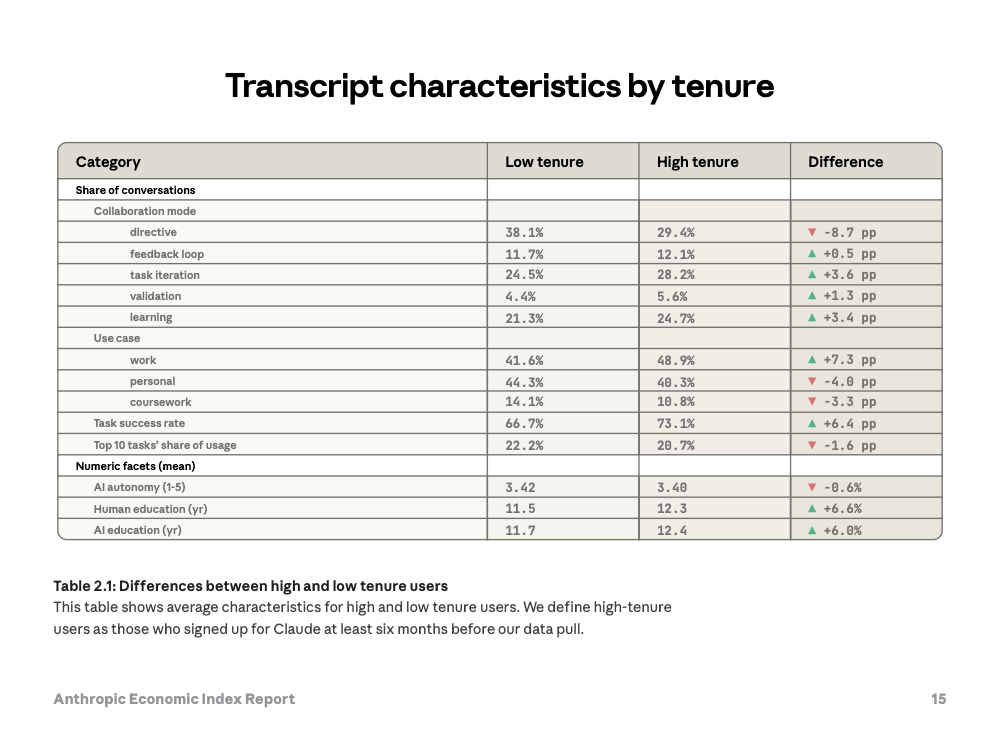
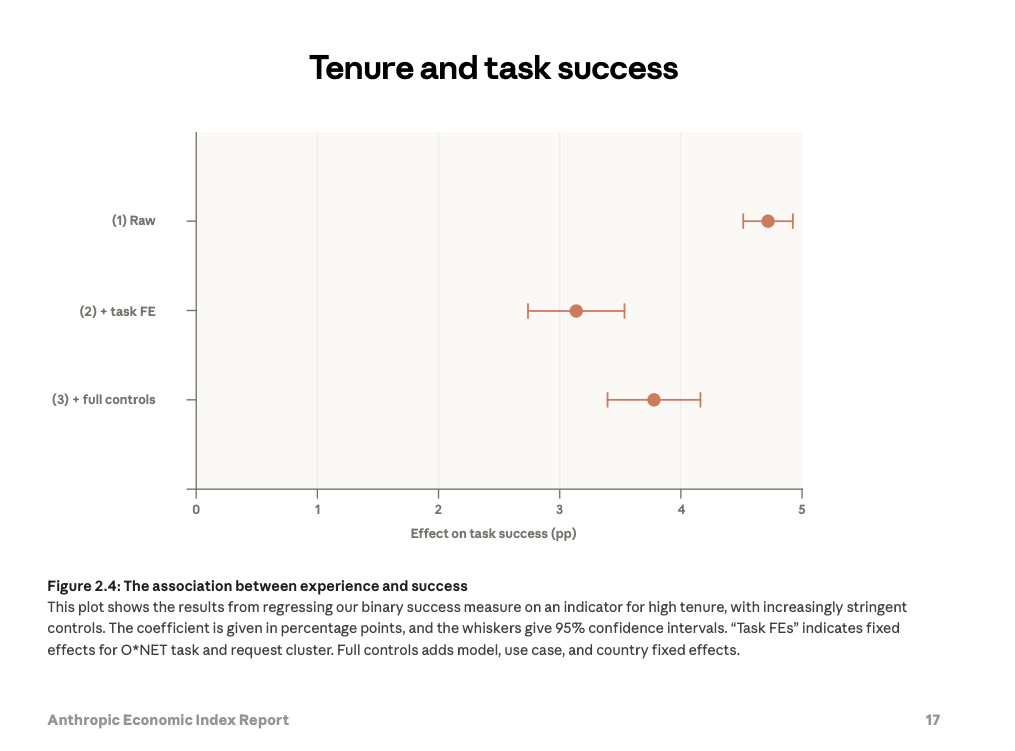
Users who've been on Claude for 6 months or more have a 73.1% success rate. New users: 66.7%. That's a 10% gap. And what makes this more than coincidence is that Anthropic controlled for task type, country of origin, and model used. The gap persists.
> "People who have been using Claude for 6 months or more have a 10% higher success rate in their conversations, an association that is not explained by their task selection, country of origin, or other factors." - Anthropic Economic Index Report, March 2026
Not because they're smarter. Not because they pick easier tasks. But because they've had time to learn how to talk to AI properly.
Source: Anthropic Economic Index Report, March 2026
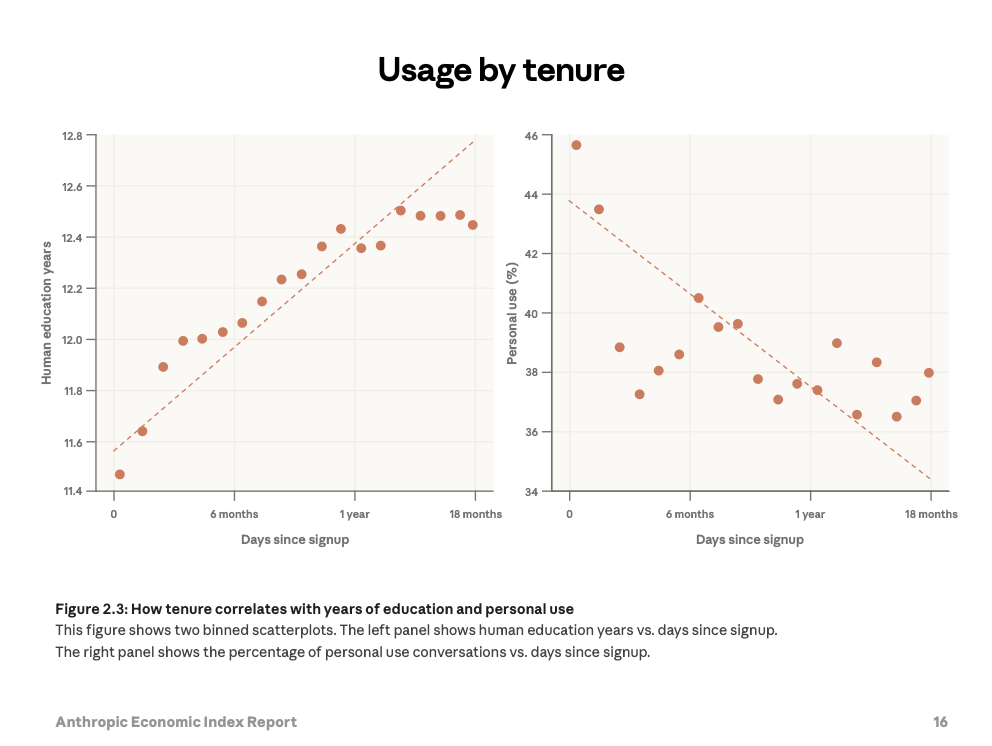
This graph is the one that really got me. The longer someone uses Claude, the higher-level the tasks they bring. Less time on trivial personal stuff, more on real, valuable work. This isn't theory. It's a measurable trajectory, month by month. I'm on the lucky side of this gap. I started early, made plenty of mistakes, and now I run 5 companies from a laptop in Bandung because of it. But when I read these numbers, I wasn't thinking about myself. I was thinking about people I know, people just as capable or even more so, who haven't started yet. Not because they're lazy. But because nobody showed them where the door is.
Source: Anthropic Economic Index Report, March 2026
> "Facility with these platforms may be a key determinant of success that appears to scale with experience." - Anthropic Economic Index Report, March 2026
This data points to something deeper than just learning to use AI. It's about a gap that's forming, slowly but surely, between those who started early and those who haven't started at all. What worries me isn't the AI itself. It's not the technology. Anthropic themselves wrote in the closing section of this report that this gap has the potential to deepen inequality in the labor market. Early adopters working on high-value tasks have higher success rates AND get more benefit from AI. Late starters get less, and fall further behind. That gap won't wait for anyone.
That's why I started documenting everything I know at scheduly.id/learn. Not because I'm a teacher. Not because I'm the best at this. But because I happened to start early, and if that head start can be compressed for others, why not.
Free. Always free.